Baldwin Second On Opening Stage Of Cascade
0 Comments Published by Unknown on Wednesday, July 11, 2007 at 10:04 PM.

Photos by Cascade Events Photography.
Bend, Ore. - Chris Baldwin’s second-place finish led four Toyota-United Pro Cycling Team riders in the top 12 on the Ironhorse-Brooks Resources Prineville Road Race on Stage 1 Wednesday at the Bend Memorial Clinic Cascade Cycling Classic.
Baldwin was out-sprinted to the summit of Pilot Butte by Ricardo Escuela (Successfulliving.com presented by ParkPre), who won the stage in three hours, 38 minutes and 13 seconds. Baldwin finished 21 seconds behind, followed by Phil Zajicek (Navigators Insurance Cycling), 27 seconds behind Escuela.
Joining Baldwin in the top 12 was Toyota-United’s Chris Wherry (sixth, at 41 seconds), Justin England (seventh, at 45 seconds) and Burke Swindlehurst (11th, at 53 seconds). Only 15 riders finished within a minute of the leader.
“The plan for today’s stage was to do whatever we could to make sure those four guys didn’t have to do anything,” Toyota-United Team Director Kirk Willett said. “We were going to be happy if it was an 80-rider bunch starting at the base of the final climb. With Heath (Blackgrove) covering the long break, it was sort of a get-out-of-jail-free card.”
By placing Blackgrove in a break of seven riders early on in the race, Toyota-United was afforded the luxury of sitting in the pack for much of the 91.2-mile (146.7 km) stage. Joining him in the escape were two riders from Successfulliving.com, plus Doug Ollerenshaw (Health Net presented by Maxxis), Ben Day (Navigators Insurance Cycling Team), Scott Zwizanski (Priority Health Cycling Team presented by Bissell) and Scott Nydam (BMC Professional Cycling Team).
Their lead reached a maximum gap of seven minutes and 45 seconds before the pack began chasing on the way up the stage’s other climb, which came about 30 miles (48 km) from the finish. Because not everyone in the break was fully committed to making it stick, Willett said Toyota-United chipped in to help bring it back.
 “We put Chepe Garcia and Stefano Barberi on the front and Priority Health had two guys working and BMC put some guys in,” he said.
Navigator’s Day, who had been the primary driver of the break, began to fade with about 10 kilometers remaining – including the final ascent to Pilot Butte (elevation: 4,138 feet). Immediately, his Navigators team massed at the front to finally reel in the escapees about a third of the way up the final climb.
“Baldwin didn’t have the best position when he started the climb but he’s riding well and caught up to the leaders about halfway up the climb,” Willett said. “With about a kilometer or so, he started driving it to the line and only Zajicek and Escuela were there. Escuela came around him in the last 150 meters or so.”
Baldwin is looking for his first victory of the season while Wherry is the race’s defending champion. With Wednesday’s balanced placings, Toyota-United leads the team classification.
Thursday’s stage is the 79.5-mile (127.9 km) Meridian Realty McKenzie Pass Road Race, which travels through the Dechutes National Forest past jagged lava fields featuring spectacular mountain views. It finishes with a gradual, 35-mile ascent of McKenzie pass to one of Central Oregon's favorite attractions, the Dee Wright Observatory, which sits at an elevation of 5,187 feet.
Willett said without any time bonuses up for grabs, he expects Successfulliving.com will be motivated to keep the leader’s yellow jersey on the back of Escuela. That should help Toyota-United conserve its energy for Friday morning’s all-important 15-mile (24.1 km) Bend Research, Inc.–Skyliners Time Trial, he said.
“The last climb Thursday is never steeper than five percent but it’s hard enough that the non-climbers will be eliminated,” Willett said. “Still, for the top 10 to 15 riders, it is unlikely to be a decisive stage.”
Labels: Burke Swindlehurst, Chris Baldwin, Chris Wherry, heath blackgrove, Jose Manuel-Garcia, Justin England, Kirk Willett, Sean Tucker, Stefano Barberi
Toyota-United Owner Quoted In USA Today
0 Comments Published by Unknown on Thursday, July 5, 2007 at 9:50 AM.
Toyota-United Pro Cycling Team Owner Sean P. Tucker was quoted several times in USA Today's preview story about the Tour de France.
Tour de France's downhill slide caused by scandals
By Sal Ruibal, USA TODAY
What if the Tour de France was held and nobody cared?
The world's biggest bike race will begin in London on Saturday and wind around France for three weeks. But a steady drip-drip-drip of doping scandals and organizational dysfunction has turned off once-rabid U.S. cycling fans who latched on during Lance Armstrong's seven wins in a row.
"I'm disgusted with what's been going on over there," says Sean P. Tucker, a former pro racer on the European circuit. He is principal owner of the Toyota-United cycling team, a unique venture that has more than 20,000 "fan members" with a financial stake in the squad that races only in the USA.
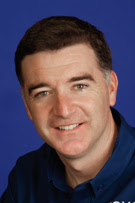 "It is disheartening to see this sport unraveling. My team and our fan members aren't going to Europe until they come up with real penalties and real doping controls. The fans follow their sports heroes, then you find out about this stuff that's going on. It's criminal."
Every day brings news of current and former cycling heroes involved in doping.
When 1996 Tour winner Bjarne Riis admitted May 25 that he used the blood-booster EPO to win his title, he extended another, more ignominious consecutive string: All the Tour winners since 1996 have been accused of, charged with or admitted using illegal performance-enhancing drugs or techniques:
•1997 winner Jan Ullrich of Germany was charged this year with blood-doping offenses stemming from the Spanish Operation Puerto scandal that disrupted the 2006 race. He retired in February, saying, "I never cheated." But former Telekom (now T-Mobile) team assistants have said they injected him and others with EPO.
•1998 champion Marco Pantani of Italy was kicked out of the '99 Tour of Italy because of a high red-blood-cell level and was charged, then cleared, of using insulin. He died of a cocaine overdose in 2004.
•Armstrong's 1999-2005 streak was attacked many times by doping allegations. He was investigated by French authorities twice and sued by insurers unwilling to pay bonus money, but he has never had a positive drug test or been charged with a doping offense.
"I raced clean," he said in a recent statement. "I won clean. I am the most tested athlete in the history of sports. I have defended myself and my reputation and won every court case to prove I was clean."
•2006 winner Floyd Landis was charged with an illegal testosterone ratio during the race. He has vigorously defended himself against the charge and is awaiting a decision from a U.S. Anti-Doping Agency arbitration panel.
The Tour de France has been aggressive about doping. A day before last year's race, it forced out nine riders who were under suspicion in the Operation Puerto case. Those included favorites Ullrich and Ivan Basso, the 2006 Tour of Italy winner and 2005 Tour de France runner-up. Basso admitted his involvement this year and recently received a two-year suspension from the sport.
Race officials say they'll keep accused riders out of this year's race, too.
"In 2007, the Tour de France will be long awaited, closely watched, observed," Tour race director Christian Prudhomme acknowledged in a statement introducing this year's event. "The events of the summer (of 2006) have left their mark. Indeed, not all of them have been resolved.
"But if the spirit is indeed the expression of a staunch and shared commitment to fight against doping, then not only do we have nothing to fear in the future but everything to hope for."
What's the problem?
Charles Pelkey, the news editor of Boulder, Colo.-based VeloNews.com, says, "The problem is that riders and teams in cycling seem to have only very slowly come to grasp just how serious the management of the sport is about doping now."
Yet Landis asserts, "There is no culture of doping in cycling. Yes, there are riders who dope, but if you look at the pool of 5,000 or so pro riders in the world, the percentage is small. There are stock traders who cheat, but you don't hear people say there's a culture of cheating on Wall Street."
Johan Bruyneel, the team director and part-owner of the Discovery Channel pro team, agrees the problem has been overstated but lays the blame for the public reaction on the sport's official leadership.
"There are always doping scandals in sport. It is just that cycling always gets more attention," says Bruyneel, a Tour stage winner in the 1995 race and architect of Armstrong's seven wins. "There are too many unsubstantiated leaks coming out, officials leaking information for whatever interests. That's crazy, and I don't understand why it is tolerated. The problem starts at the top. The current leadership of cycling has no new ideas."
Bruyneel believes the answer is not more testing but more leadership.
"The sport is miles ahead of any other sport in the quantity and quality of testing, both at races and out of competition," he says. "What the sport needs now is one big personality, someone who is respected. This has to be done like a business, bringing in outside experts with a neutral view.
"We need someone like a Donald Trump or (billionaire sports magnate) Phillip Anschutz, someone who has a big reputation and can put all of the parties in the same room and start solving some problems."
Pat McQuaid, the president of the Union Cycliste International (UCI), says the sport's governing body has instituted changes that will help the sport clean up. That includes a mandatory pledge from riders they have not been involved in doping and the submission of DNA samples to verify positive tests. Riders who are caught doping will have to forfeit a year's salary and receive suspensions of up to four years.
"I am not that concerned by the past," McQuaid says. "My concern is the present and future, and I am striving that this will be credible. One cannot change culture overnight, but it will happen. In cycling today, the forces of good are much stronger than the forces of evil, and the pressure is increasing daily."
Cash flow
Unlike the U.S. professional sports leagues that depend heavily on television contracts, cycling has anemic ratings — the Versus cable network's five daily Tourcasts collectively drew an average of about 700,000 viewers last year — and is funded through corporate sponsorships.
The Discovery Channel team, known as U.S. Postal Service for six of Armstrong's wins, is looking for a title sponsor after new Discovery corporate managers decided not to extend the $12 million deal.
The search for a sponsor "has not been easy, but at the same time I feel optimistic," Bruyneel says. "We can prove that as a team, we have the best sports franchise in the history of cycling. Sure, the market for sponsorships is tough, but this is about investing. … It is all a matter of reaching the right guy at the right moment."
The team that made Americans notice pro cycling is looking to Asia for sponsorships. In the last year it signed Chinese star Fu Yu Li and Japanese national champion Fumiyuki Beppo.
"Talks are going on with some Asian companies," Bruyneel says.
At Specialized Bicycle Components in Morgan Hill, Calif., founder and President Mike Sinyard is still bullish on the sport and has bicycle and equipment sponsorships with the Belgian Quick Step-Innergetic and German Gerolsteiner pro teams.
"We're involved in cycling because we love the sport and, as a company, we revel in the competitive aspect of cycling," he says. "So we have absolutely no regrets regarding our sponsorships."
Team CSC, based in Denmark but sponsored by El Segundo, Calif.-based Computer Sciences Corp., is sticking with the squad despite the admission from owner and team director Riis that he used EPO to win the 1996 Tour. Riis can't be charged because of pro cycling's eight-year statute of limitations.
"Our experience with Bjarne Riis shows an honest effort to admit past mistakes and accept responsibility is an important step in repairing the damage caused by doping," CSC spokeswoman Theresa McDermit says. "We continue to support his efforts to make things right and to help move the sport to a new level of transparency and responsibility. … It's not too late to secure a better future for the sport we all love."
Toyota-United's Tucker doesn't buy it. "If they really had character and integrity, they would never have crossed the line," he says. "Did any of these guys apologize to their clean competitors for taking money from their families?"
Tour de France's downhill slide caused by scandals
By Sal Ruibal, USA TODAY
What if the Tour de France was held and nobody cared?
The world's biggest bike race will begin in London on Saturday and wind around France for three weeks. But a steady drip-drip-drip of doping scandals and organizational dysfunction has turned off once-rabid U.S. cycling fans who latched on during Lance Armstrong's seven wins in a row.
"I'm disgusted with what's been going on over there," says Sean P. Tucker, a former pro racer on the European circuit. He is principal owner of the Toyota-United cycling team, a unique venture that has more than 20,000 "fan members" with a financial stake in the squad that races only in the USA.
 "It is disheartening to see this sport unraveling. My team and our fan members aren't going to Europe until they come up with real penalties and real doping controls. The fans follow their sports heroes, then you find out about this stuff that's going on. It's criminal."
Every day brings news of current and former cycling heroes involved in doping.
When 1996 Tour winner Bjarne Riis admitted May 25 that he used the blood-booster EPO to win his title, he extended another, more ignominious consecutive string: All the Tour winners since 1996 have been accused of, charged with or admitted using illegal performance-enhancing drugs or techniques:
•1997 winner Jan Ullrich of Germany was charged this year with blood-doping offenses stemming from the Spanish Operation Puerto scandal that disrupted the 2006 race. He retired in February, saying, "I never cheated." But former Telekom (now T-Mobile) team assistants have said they injected him and others with EPO.
•1998 champion Marco Pantani of Italy was kicked out of the '99 Tour of Italy because of a high red-blood-cell level and was charged, then cleared, of using insulin. He died of a cocaine overdose in 2004.
•Armstrong's 1999-2005 streak was attacked many times by doping allegations. He was investigated by French authorities twice and sued by insurers unwilling to pay bonus money, but he has never had a positive drug test or been charged with a doping offense.
"I raced clean," he said in a recent statement. "I won clean. I am the most tested athlete in the history of sports. I have defended myself and my reputation and won every court case to prove I was clean."
•2006 winner Floyd Landis was charged with an illegal testosterone ratio during the race. He has vigorously defended himself against the charge and is awaiting a decision from a U.S. Anti-Doping Agency arbitration panel.
The Tour de France has been aggressive about doping. A day before last year's race, it forced out nine riders who were under suspicion in the Operation Puerto case. Those included favorites Ullrich and Ivan Basso, the 2006 Tour of Italy winner and 2005 Tour de France runner-up. Basso admitted his involvement this year and recently received a two-year suspension from the sport.
Race officials say they'll keep accused riders out of this year's race, too.
"In 2007, the Tour de France will be long awaited, closely watched, observed," Tour race director Christian Prudhomme acknowledged in a statement introducing this year's event. "The events of the summer (of 2006) have left their mark. Indeed, not all of them have been resolved.
"But if the spirit is indeed the expression of a staunch and shared commitment to fight against doping, then not only do we have nothing to fear in the future but everything to hope for."
What's the problem?
Charles Pelkey, the news editor of Boulder, Colo.-based VeloNews.com, says, "The problem is that riders and teams in cycling seem to have only very slowly come to grasp just how serious the management of the sport is about doping now."
Yet Landis asserts, "There is no culture of doping in cycling. Yes, there are riders who dope, but if you look at the pool of 5,000 or so pro riders in the world, the percentage is small. There are stock traders who cheat, but you don't hear people say there's a culture of cheating on Wall Street."
Johan Bruyneel, the team director and part-owner of the Discovery Channel pro team, agrees the problem has been overstated but lays the blame for the public reaction on the sport's official leadership.
"There are always doping scandals in sport. It is just that cycling always gets more attention," says Bruyneel, a Tour stage winner in the 1995 race and architect of Armstrong's seven wins. "There are too many unsubstantiated leaks coming out, officials leaking information for whatever interests. That's crazy, and I don't understand why it is tolerated. The problem starts at the top. The current leadership of cycling has no new ideas."
Bruyneel believes the answer is not more testing but more leadership.
"The sport is miles ahead of any other sport in the quantity and quality of testing, both at races and out of competition," he says. "What the sport needs now is one big personality, someone who is respected. This has to be done like a business, bringing in outside experts with a neutral view.
"We need someone like a Donald Trump or (billionaire sports magnate) Phillip Anschutz, someone who has a big reputation and can put all of the parties in the same room and start solving some problems."
Pat McQuaid, the president of the Union Cycliste International (UCI), says the sport's governing body has instituted changes that will help the sport clean up. That includes a mandatory pledge from riders they have not been involved in doping and the submission of DNA samples to verify positive tests. Riders who are caught doping will have to forfeit a year's salary and receive suspensions of up to four years.
"I am not that concerned by the past," McQuaid says. "My concern is the present and future, and I am striving that this will be credible. One cannot change culture overnight, but it will happen. In cycling today, the forces of good are much stronger than the forces of evil, and the pressure is increasing daily."
Cash flow
Unlike the U.S. professional sports leagues that depend heavily on television contracts, cycling has anemic ratings — the Versus cable network's five daily Tourcasts collectively drew an average of about 700,000 viewers last year — and is funded through corporate sponsorships.
The Discovery Channel team, known as U.S. Postal Service for six of Armstrong's wins, is looking for a title sponsor after new Discovery corporate managers decided not to extend the $12 million deal.
The search for a sponsor "has not been easy, but at the same time I feel optimistic," Bruyneel says. "We can prove that as a team, we have the best sports franchise in the history of cycling. Sure, the market for sponsorships is tough, but this is about investing. … It is all a matter of reaching the right guy at the right moment."
The team that made Americans notice pro cycling is looking to Asia for sponsorships. In the last year it signed Chinese star Fu Yu Li and Japanese national champion Fumiyuki Beppo.
"Talks are going on with some Asian companies," Bruyneel says.
At Specialized Bicycle Components in Morgan Hill, Calif., founder and President Mike Sinyard is still bullish on the sport and has bicycle and equipment sponsorships with the Belgian Quick Step-Innergetic and German Gerolsteiner pro teams.
"We're involved in cycling because we love the sport and, as a company, we revel in the competitive aspect of cycling," he says. "So we have absolutely no regrets regarding our sponsorships."
Team CSC, based in Denmark but sponsored by El Segundo, Calif.-based Computer Sciences Corp., is sticking with the squad despite the admission from owner and team director Riis that he used EPO to win the 1996 Tour. Riis can't be charged because of pro cycling's eight-year statute of limitations.
"Our experience with Bjarne Riis shows an honest effort to admit past mistakes and accept responsibility is an important step in repairing the damage caused by doping," CSC spokeswoman Theresa McDermit says. "We continue to support his efforts to make things right and to help move the sport to a new level of transparency and responsibility. … It's not too late to secure a better future for the sport we all love."
Toyota-United's Tucker doesn't buy it. "If they really had character and integrity, they would never have crossed the line," he says. "Did any of these guys apologize to their clean competitors for taking money from their families?"
Labels: Sean Tucker


